
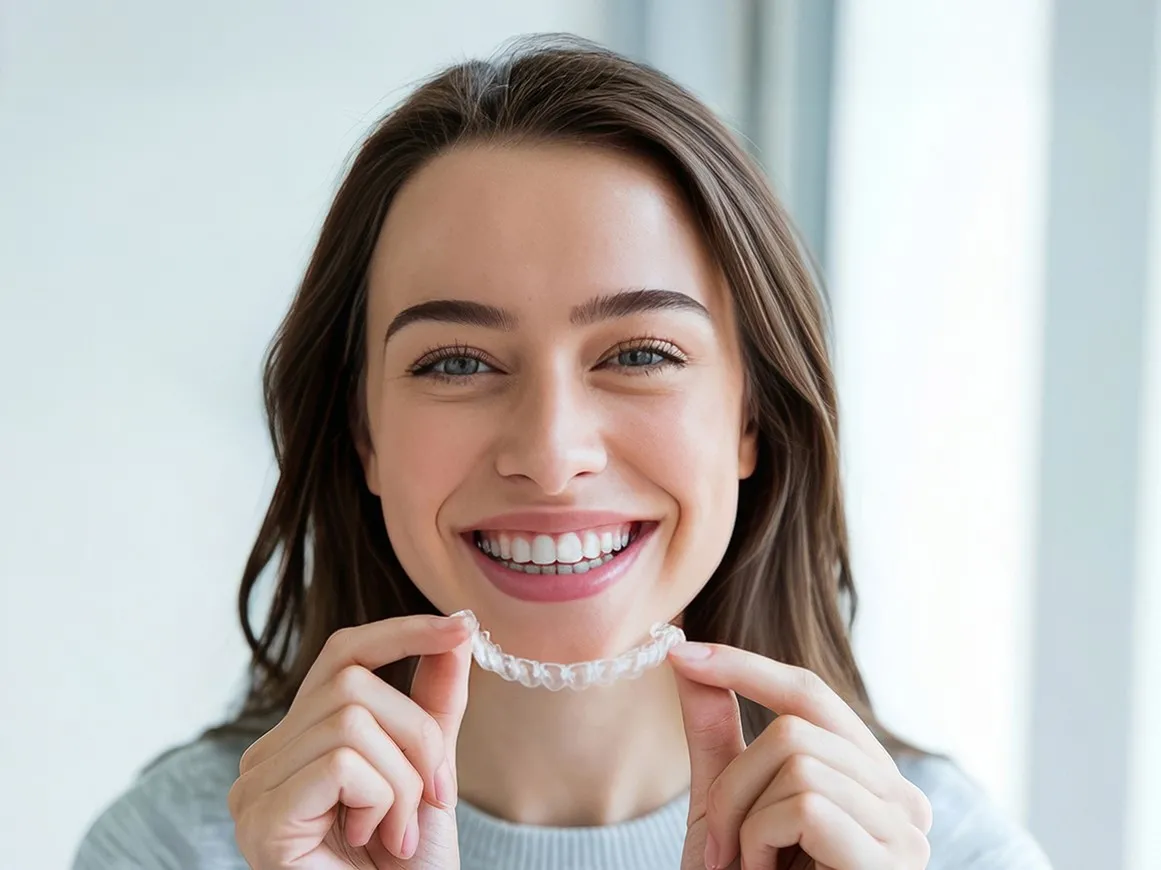
What Is Invisalign and How Does It Differ from Traditional Braces?
Invisalign is a clear aligner system that uses custom-made, removable plastic trays to straighten teeth. Traditional braces use metal or ceramic brackets bonded directly to your teeth, connected by archwires. Board-certified orthodontists evaluate both options with every patient, because the right choice depends on your specific bite.
For most mild to moderate orthodontic cases, Invisalign is as effective as traditional braces. Both are FDA-cleared treatments that move teeth through controlled force, and both can deliver beautiful, lasting results. The difference is in the method, not the outcome.
The core difference comes down to approach. Invisalign aligners slip on and off, making eating and brushing simple. Braces stay fixed in place, working around the clock without any effort on your part. Invisalign has treated millions of patients worldwide, proving it's far more than a cosmetic alternative.
So which one actually works better? Your specific bite, your lifestyle, and how committed you are to wearing your aligners all play a role. Let's break down the real differences so you can make a confident choice.
How Invisalign and Traditional Braces Move Your Teeth
Both treatments rely on the same biological principle: applying steady pressure to teeth causes bone remodeling, allowing teeth to shift into new positions. The delivery method is where they differ.
Invisalign
Invisalign uses a series of progressive aligner trays, each slightly different from the last. Every one to two weeks, you switch to a new set, and each tray nudges your teeth a little closer to their final position. SmartTrack material, a proprietary thermoplastic, hugs teeth precisely. Small tooth-colored attachments bonded to certain teeth give the aligners grip for more complex movements.
Traditional Braces
Traditional braces use brackets cemented to each tooth, connected by a metal archwire. Your orthodontist adjusts the wire and adds elastic ties every four to eight weeks. The wire's tension pulls teeth along a planned path.
Treatment timelines vary based on complexity. Invisalign averages 12 to 18 months for most cases. Braces typically run 18 to 24 months. Neither is inherently faster. Your specific bite determines the timeline more than the appliance itself.
Your orthodontist's evaluation of your specific bite determines which method moves your teeth most efficiently. Both systems move teeth. The question is which one moves yours most efficiently given your unique situation.
Benefits of Invisalign Over Traditional Braces
Clear aligners offer genuine advantages that Meier Orthodontics patients notice in daily life. Here are the everyday benefits that often tip the decision toward clear aligners.
Why Does Appearance Matter During Orthodontic Treatment?
Invisalign trays are nearly invisible. You can smile in photos, lead meetings, or go on dates without metal catching the light. For adults and image-conscious teens, this alone can be the deciding factor. It's one of the most common reasons people ask about clear aligners in the first place.
What Can You Eat with Invisalign?
Pop out your aligners, enjoy your meal, brush your teeth, and put them back in. No food restrictions. No picking popcorn kernels out of brackets. That freedom is something braces wearers genuinely miss.
How Does Oral Hygiene Work During Invisalign Treatment?
Brushing and flossing work exactly like they did before treatment. No special threaders, no awkward angles, no food traps. Your regular routine stays intact.
That means healthier gums and fewer cavities during treatment. Over 12 to 18 months, this practical advantage really adds up, especially for teens who are still building strong hygiene habits. Keeping teeth clean with braces takes real effort, extra tools, and more time at the sink. Aligners remove that obstacle entirely.
Is Invisalign More Comfortable Than Braces?
Smooth plastic sits against your cheeks and lips without poking or scraping. Pressure comes when you switch to a new tray, but the sharp irritation from broken wires or loose brackets? Not part of the Invisalign experience. Most patients notice the comfort difference right away.
Fewer visits also fit busy schedules. With traditional braces, you're in the chair every four to eight weeks for adjustments. Invisalign check-ins are often less frequent, and many practices now use remote monitoring technology to track progress between visits.
Here's a bonus: you see your results before you start. Digital planning shows you a 3D preview of how your teeth will move and what your smile will look like at the end. It's not a guess. It's a visual roadmap you can review and feel confident about before anything goes on your teeth.
Invisalign vs. Braces: Effectiveness Compared by Case Type
Here's the honest breakdown from board-certified orthodontists of how each treatment performs across different orthodontic issues.
| Case Type | Invisalign Effectiveness | Traditional Braces Effectiveness |
|---|---|---|
| Mild to moderate crowding | Excellent | Excellent |
| Gaps between teeth | Excellent | Excellent |
| Overbite | Very good (with attachments/elastics) | Excellent |
| Underbite | Good to very good | Excellent |
| Crossbite | Good to very good | Excellent |
| Open bite | Good (improved with newer protocols) | Very good |
| Severe rotations | Moderate | Excellent |
| Complex skeletal issues | Limited | Better suited |
How Well Does Invisalign Handle Crowding and Spacing?
Mild to moderate crowding and spacing respond equally well to both treatments. If your teeth need to shift a few millimeters and rotate slightly, Invisalign handles it beautifully. Research published in orthodontic journals consistently shows comparable outcomes for these common cases, and most orthodontists consider aligners and braces interchangeable for straightforward crowding.
Can Invisalign Correct Bite Issues?
Bite corrections have become an Invisalign strength. Overbites, underbites, and crossbites that once required braces can now be treated with clear aligners using attachments and rubber bands. The technology has caught up significantly over the past decade.
Severe skeletal discrepancies or teeth that need significant rotation still favor traditional braces. When teeth need to move in multiple directions at once or when jaw positioning is involved, brackets and wires offer more precise control. The American Association of Orthodontists notes that treatment selection should always be based on the individual case, not patient preference alone.
Does Compliance Affect Invisalign Results?
Compliance is the variable nobody can predict. Invisalign requires 20 to 22 hours of daily wear. Take them out for meals, put them right back in. If you're only wearing aligners 14 hours a day, your treatment will stall or fail entirely. Braces work whether you're motivated or not.
Peer-reviewed studies comparing outcomes show comparable results for most malocclusion categories when patients follow their aligner wear schedule as prescribed. Board-certified orthodontists use these evidence-based guidelines, along with professional consensus from the American Association of Orthodontists, to match each patient with the right treatment approach.
Cost Factors: Invisalign vs. Traditional Braces
Invisalign and traditional braces cost roughly the same. Invisalign typically runs $3,000 to $8,000, while traditional braces range from $2,500 to $7,000, with significant overlap depending on case complexity, treatment duration, and geographic location.
What Drives the Cost of Orthodontic Treatment?
Three main factors determine your final cost:
- Case complexity: A straightforward spacing case costs less than a complex bite correction, regardless of whether you choose aligners or brackets.
- Treatment duration: Longer treatments require more materials, more visits, and more orthodontist time.
- Geographic location: Orthodontic fees vary by region, with urban areas and coastal cities typically running higher than rural communities.
Case complexity drives cost more than appliance type. The difference between a simple and complex case matters far more than the difference between aligners and brackets.
Does Insurance Cover Invisalign?
Most dental insurance plans now cover Invisalign the same way they cover traditional braces. Check your specific policy, but don't assume aligners aren't covered. HSA and FSA accounts can offset costs as well. Many orthodontic practices, including Meier Orthodontics, offer flexible payment structures with low monthly payment options that keep treatment within reach without a large upfront investment.
The only way to know your actual cost is through a consultation with a board-certified orthodontist. Every mouth is different, and online estimates can't account for your specific bite, your timeline, or your insurance benefits.
Who Is a Good Candidate for Invisalign vs. Braces?
Not everyone is the right fit for every treatment. Here's how orthodontists typically think about candidacy.
How Do Orthodontists Determine the Best Fit?
Ideal Invisalign candidates include:
- Teens and adults with mild to moderate alignment issues
- People who can commit to wearing aligners 20 to 22 hours daily, no exceptions
- Anyone who wants to maintain their appearance during treatment
- Athletes, musicians, or professionals who need the flexibility to remove their appliance
- Those with solid oral hygiene habits who are comfortable managing removable trays
Braces may be the better choice for:
- Young children whose teeth and jaws are still developing significantly
- Cases requiring substantial jaw modification
- Honest about compliance? If removable aligners will end up in a backpack more than on your teeth, braces are the smarter call
- Complex tooth movements that need precise multi-directional control
Age-specific options exist too. Invisalign for Teens includes compliance indicators and replacement aligners for the inevitable lost tray. Invisalign for Kids addresses mixed dentition in younger patients.
A board-certified orthodontist's evaluation takes the guesswork out of this decision. What worked for your coworker might not work for you. The team at Meier Orthodontics in Jupiter, FL helps patients determine which option fits their specific case, their lifestyle, and their goals.
Frequently Asked Questions About Invisalign Effectiveness
Can Invisalign correct an overbite as well as braces?
Yes, for most cases. Modern Invisalign treatment uses attachments and elastics to correct overbites effectively. The aligners grip onto small tooth-colored bumps bonded to your teeth, providing the force needed to shift your bite. For the majority of overbite cases, Invisalign achieves results comparable to traditional braces.
Is Invisalign faster than braces?
For mild to moderate cases, it often is. Invisalign treatment averages 12 to 18 months, while braces typically run 18 to 24 months. Speed depends entirely on your specific bite and how consistently you wear your aligners, though. Complex cases may take longer with either treatment.
Does Invisalign hurt less than braces?
Most patients report less discomfort with Invisalign than with braces. Pressure shows up when you switch to a new aligner tray, but the gradual force distribution tends to be gentler than wire tightening. The cheek irritation, mouth sores, and poking wires that come with brackets aren't part of the equation.
Can you switch from Invisalign to braces mid-treatment?
Yes. Your orthodontist can pivot to braces for a specific phase if your teeth respond better that way. Treatment approaches can adapt as your teeth move, and a good orthodontist will always prioritize what's producing the best results for your smile.
Do you still need retainers after Invisalign?
Retention is required after both Invisalign and braces, no exceptions. Your teeth will naturally want to drift back toward their original positions. Wearing retainers as directed, typically nightly for life, keeps your results stable. This isn't unique to clear aligners. It's how orthodontics works.
Both Invisalign and traditional braces deliver great results when matched to the right case. If you're weighing your options, talking to a board-certified orthodontist is the simplest way to get real answers about your specific bite, your timeline, and what each path involves. The right evaluation makes all the difference.