
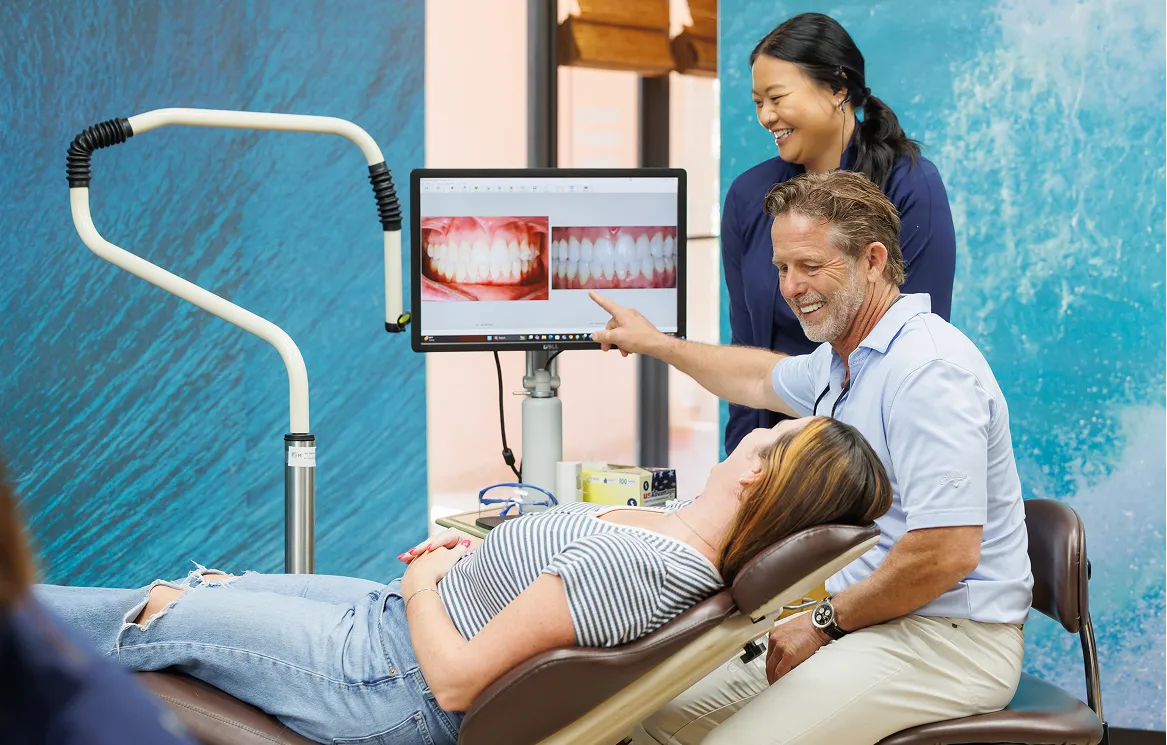
Should I choose Invisalign or traditional braces for my teeth? That's one of the most common questions we hear at our Jupiter, FL practice. The short answer: it depends on your bite, lifestyle, and goals. Invisalign uses clear, removable aligners. Traditional braces use brackets bonded to teeth with connecting wires. Both work well.
At Meier Orthodontics in Jupiter, FL, our team helps patients and families across Jupiter and Palm Beach County figure out which option fits their smile goals best. With over 25 years of trusted expertise in our hometown, we've guided thousands of patients through both treatment paths.
Invisalign aligners are nearly invisible when worn, making them popular with adults and teens who prefer a discreet look. Traditional braces, sometimes called old-school orthodontics, are more visible but offer greater control for complex cases. The brackets can be metal or tooth-colored ceramic, and some patients even enjoy choosing colorful bands to express their personality.
Both treatments require commitment and follow-up care. Your orthodontist will recommend the approach that matches your specific needs after a thorough evaluation.
How Each Treatment Straightens Your Teeth
Invisalign treatment begins with detailed 3D scans of your teeth. These scans create a customized series of aligners, each designed to move your teeth a little closer to their final position. You wear each set of aligners for 20 to 22 hours daily, switching to a new set every one to two weeks. The aligners apply gentle, consistent pressure to guide teeth into alignment.
Traditional braces work differently. Your orthodontist bonds brackets directly to each tooth, then threads an archwire through them. This wire applies constant pressure that shifts teeth over time. Every four to eight weeks, you return for adjustments where the wire is tightened or replaced to continue progress.
The mechanics differ. The goal is the same.
Treatment time for both options typically ranges from 6 to 24 months, depending on how much correction you need. Simple spacing issues may resolve quickly. More complex bite problems take longer to address.
After either treatment, you'll wear retainers to keep your teeth in their new positions. This step is essential for lasting results.
At our Jupiter, FL practice, we use DentalMonitoring technology to track your progress remotely. That means fewer visits to the practice and quicker adjustments when needed. You simply scan your teeth at home, and our team reviews your progress weekly.
Pros and Cons of Invisalign vs. Braces
What Are the Advantages of Invisalign?
Clear aligners offer several appealing benefits:
- Nearly invisible appearance - Most people won't notice you're wearing them
- Removable for eating - No food restrictions; enjoy popcorn, apples, and sticky treats
- Easier oral hygiene - Take aligners out to brush and floss normally
- Smooth, comfortable fit - No wires or brackets to irritate your cheeks and lips
- Fewer emergency visits - No broken brackets or poking wires to address
What Are the Advantages of Traditional Braces?
Braces bring their own strengths to the table:
- Work around the clock - No compliance required; they're always on the job
- Handle complex cases - Better for severe crowding, rotation, and vertical tooth movement
- Precise control - Your orthodontist can make detailed adjustments at each visit
- Fun customization - Kids and teens love picking colorful elastic bands
- No risk of losing them - Unlike aligners, braces can't be misplaced
Both options deliver lasting results when guided by a trusted orthodontist. The right choice comes down to your specific needs and preferences.
Invisalign vs. Braces: Side-by-Side Comparison
| Factor | Invisalign | Traditional Braces |
|---|---|---|
| Appearance | Clear, nearly invisible aligners | Visible metal or ceramic brackets |
| Comfort | Smooth plastic, minimal irritation | Potential wire and bracket irritation |
| Oral Hygiene | Remove to brush and floss normally | Requires special tools to clean around brackets |
| Diet | No food restrictions | Avoid hard, sticky, and crunchy foods |
| Practice Visits | Fewer visits with DentalMonitoring | Regular adjustment visits every 4-8 weeks |
| Patient Discipline | Must wear 20+ hours daily | Works automatically, no compliance needed |
| Best For | Mild to moderate cases, image-conscious patients | Complex cases, younger patients |
The discipline factor matters more than many patients expect. Invisalign only works when you wear the aligners. If they sit in your bag or on your nightstand, your teeth won't move. Braces remove that variable entirely since they're fixed in place.
What Affects the Cost of Invisalign and Braces?
For comparable cases, Invisalign and traditional braces are often priced about the same. The biggest factor in treatment cost isn't the type of appliance, it's the complexity of your case. A simple spacing issue costs less to treat than a severe overbite with crowding. The more work your teeth need, the longer treatment takes and the more it costs.
Several factors influence your final cost:
- Treatment length - Longer treatments require more aligners or more adjustment visits
- Number of aligners - Complex Invisalign cases need more trays
- Type of braces - Ceramic brackets typically cost more than metal
- Additional appliances - Some cases need rubber bands, expanders, or other tools
The good news? Most dental insurance plans cover a portion of orthodontic treatment, whether you choose Invisalign or braces. Coverage often applies equally to both options.
We offer low monthly payment plans to help families across Jupiter, FL fit treatment into their budget. Many patients also use HSA or FSA funds to cover costs with pre-tax dollars.
The best way to understand your specific costs is through a complimentary consult where we can evaluate your needs and discuss options.
Who Is a Good Candidate for Each Option?
Who Is Invisalign Best For?
Invisalign handles mild to moderate orthodontic issues well. Good candidates include:
- Adults who want a discreet treatment option
- Teens who will commit to wearing aligners consistently
- Patients with mild to moderate crowding or spacing
- Those with minor bite issues like slight overbites or underbites
- People who want flexibility to remove aligners for special occasions
Invisalign Teen includes special features like compliance indicators that fade with wear, helping parents and orthodontists confirm aligners are being worn properly.
Who Are Traditional Braces Best For?
Braces remain the gold standard for complex orthodontic cases. They're ideal for:
- Severe crowding or spacing issues
- Significant bite problems requiring precise tooth control
- Younger children who may not wear aligners consistently
- Cases requiring tooth rotation or vertical movement
- Patients who prefer a "set it and forget it" approach
For growing children, two-phase treatment sometimes combines early intervention with later complete treatment. This approach guides jaw development first, then addresses tooth alignment as permanent teeth come in.
The only way to know which option fits you best is through a professional evaluation. During a complimentary consult at Meier Orthodontics in Jupiter, FL, our doctors, including board-certified orthodontist Dr. Menashe, look at your teeth, bite, and goals to recommend the right approach for your smile.
Frequently Asked Questions
Which is faster, Invisalign or braces?
Treatment speed depends on your specific case, not the appliance type. Simple alignment issues may resolve in six months with either option. Complex bite corrections can take two years or more regardless of which treatment you choose. Your orthodontist will give you a realistic timeline based on your needs.
Are Invisalign results as good as braces?
Yes, for appropriate cases. Invisalign effectively treats mild to moderate orthodontic issues with results comparable to braces. Complex cases may still benefit from the precise control that braces provide. Our board-certified orthodontist Dr. Menashe can evaluate which option will deliver the best results for your specific bite.
Is Invisalign more expensive than braces?
Costs are often similar for comparable cases. The final price depends more on treatment complexity and length than on the type of appliance. During your complimentary consult, we provide a clear breakdown of costs for both options.
Can teens get Invisalign?
Absolutely. Invisalign Teen is designed specifically for adolescent patients. The aligners include compliance indicators and replacement aligners in case any get lost. Many teens prefer the discreet look and freedom to remove aligners for sports, band, or special events.
Do braces hurt more than Invisalign?
Both cause mild soreness after adjustments or when switching to new aligners. This discomfort typically lasts a few days and responds well to over-the-counter relievers. Braces may cause additional irritation from brackets and wires rubbing against cheeks, though dental wax helps manage this.
Can I switch from braces to Invisalign mid-treatment?
Yes, in some cases. If braces have already corrected the complex issues and your remaining adjustments are minor, switching to aligners may be possible. The decision depends on your specific progress, remaining treatment needs, and your orthodontist's approval after reviewing your case.
Ready to find out which option fits your smile goals? Schedule a complimentary consult with our team at Meier Orthodontics in Jupiter, FL. We'll evaluate your teeth, answer your questions, and help you understand your best path forward. With tools like DentalMonitoring and care tailored to each patient, we make it easy to learn more about your options.